
Cornering a semi truck is one of the most important and often underestimated skills a driver develops. Tight turns, urban streets, and busy intersections all increase the risk of costly mistakes.
This guide covers five practical semi truck cornering tips to help reduce tire wear, avoid equipment damage, and improve overall safety on the road.
Why semi truck cornering tips Matter
Poor turning technique can lead to:
- Premature tire wear or blowouts
- Damaged rims or suspension components
- Striking curbs, signs, or nearby vehicles
- Increased maintenance costs over time
Understanding how your truck and trailer move through a turn is key to preventing these issues.
1. Set Up Wide Before the Turn
A successful turn starts with proper positioning.
Before turning, move toward the outside edge of your lane (while staying safe and legal). This creates more space for your trailer to follow without cutting too sharply.
Keep in mind: your trailer will always take a tighter path than your tractor.
2. Focus on Trailer Off-Tracking
One of the most important concepts in truck driving is off-tracking, which is when the trailer follows a shorter path than the cab.
To manage this:
- Use your mirrors continuously
- Pay close attention to your rear trailer wheels
- Make small adjustments early
This is especially critical during right-hand turns.
3. Reduce Speed Before Entering the Turn
Speed plays a major role in how well your truck handles a corner.
Taking turns too quickly can cause:
- Tire scrubbing and excessive wear
- Reduced control of the trailer
- Increased risk of striking obstacles
A slower, controlled turn allows you to react and adjust as needed.
4. Use all Mirrors Throughout the Turn
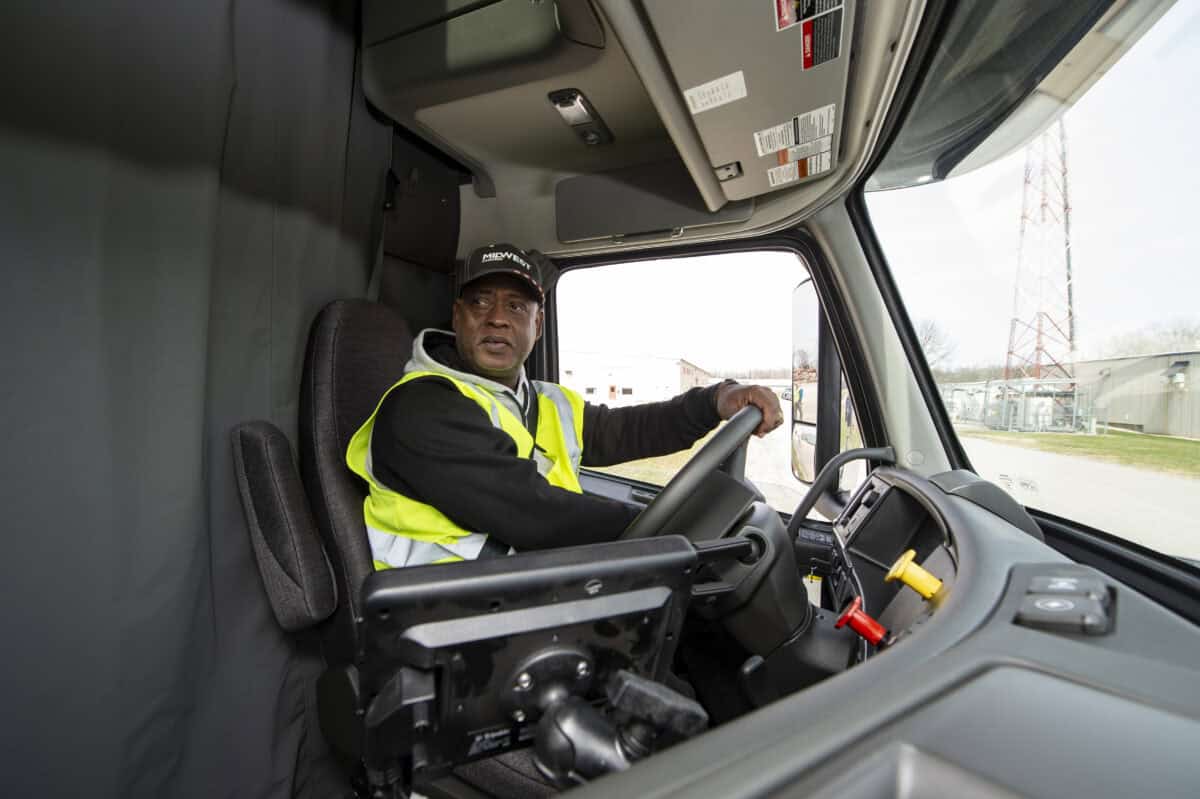
Consistent mirror use is essential during any turn. A semi truck gives you multiple mirror views, so use all of them. Don’t rely on just one angle when you’re working through a corner.

- Passenger-side (right) mirror: Helps track trailer position and keep you aligned in your lane
- Driver-side mirror: Help track trailer position, swing, and surrounding hazards
- Hood mirrors: Useful for close-range visibility around the front corners of the truck
- Convex (spot) mirrors: Give you a wider view to catch trailer swing and nearby hazards
Scan your mirrors continuously throughout the turn to stay aware and avoid curbs, signs, and other obstacles.
5. Avoid Turning Too Early
Starting your turn too soon is a common cause of curb strikes and tire damage.
Instead:
- Pull forward slightly longer than you think you need
- Begin the turn gradually
- Allow the trailer enough space to follow through cleanly
Small timing adjustments can make a big difference in tight environments.
Right Turns vs. Left Turns: What to Watch For
Right Turns
- Trailer wheels track closest to the curb
- Limited space increases margin for error
- Requires constant monitoring of the right mirror
Taking your time and maintaining visibility is critical.
Left Turns
- Trailer swing may extend into adjacent lanes
- Turning too early can lead to clipping medians
- Requires attention to both sides of the vehicle
A smooth, wide arc helps keep everything aligned.
When to Use “Get Out and Look” (GOAL)
If visibility is limited or something doesn’t feel right, it’s always appropriate to stop and check.
Taking a moment to confirm your position can prevent:
- Equipment damage
- Safety incidents
- Unnecessary stress during the maneuver
Final Thoughts
Safe cornering comes down to awareness, patience, and consistency. By focusing on setup, speed, and trailer position, drivers can reduce wear on their equipment and navigate tight turns more confidently.
For additional safety guidance, visit the Federal Motor Carrier Safety Administration (FMCSA):
https://www.fmcsa.dot.gov/ourroads/wide-turns
If you missed our tips on driving during the day vs. night, you can check them out here:
Day vs. Night Driving Tips